
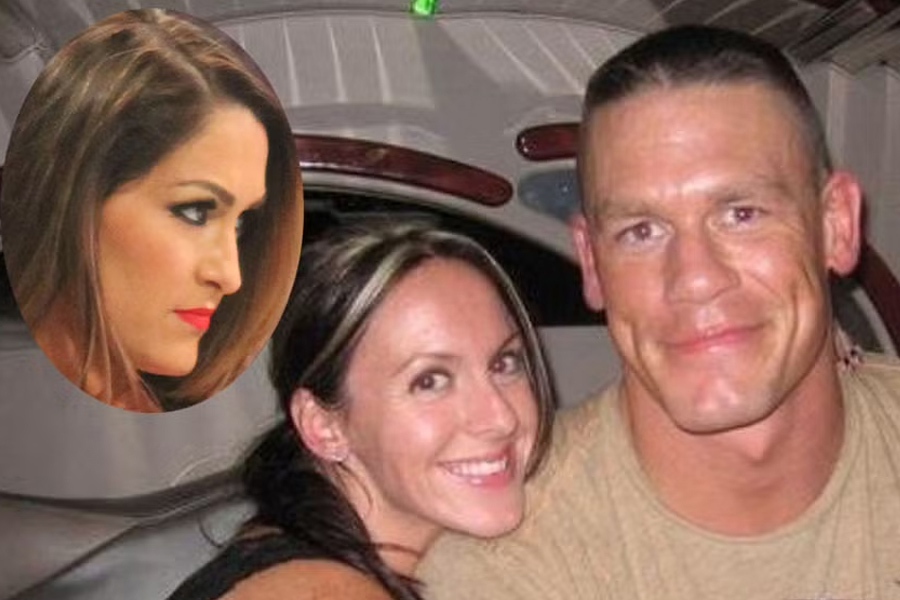
A name that appears in the margins of fame
Theresa Lynn Wood occupies a rare kind of public position. Her name surfaces because of a famous marriage, yet the rest of her life remains largely out of view. That tension creates a strange kind of spotlight. She is visible enough to be searched, quoted, and mistaken for others, but private enough that most of the story around her is made of shadows, not headlines. In celebrity culture, that is almost its own form of biography. A person can become known by refusal alone, like a lighthouse that never turns toward the shore.
What makes Theresa Lynn Wood interesting is not a trail of public appearances or a long list of interviews. It is the opposite. She represents the people who stand near fame without being swallowed by it. Her story invites a broader look at how private lives are treated when they brush against public legends, especially in the world of professional wrestling, where spectacle tends to consume everything nearby.
Marriage in the orbit of a rising star
Theresa Lynn Wood is best remembered as the first wife of Shawn Michaels, whose name became one of the most recognizable in professional wrestling. Their marriage took place before the peak of his global superstardom, during a period when the road, the ring, and the pace of the industry were already demanding more than ordinary life could easily give. That detail matters. It is easy to imagine fame as a bright finish line, but in reality it often behaves like a storm system, spreading pressure far beyond the person in the center.
A marriage that begins before the full scale of celebrity arrives can be tested in unusual ways. The hours grow irregular. Home becomes a stopping point rather than a center. Private conversations compete with public demand. Theresa Lynn Wood was tied to that environment, but she did not turn it into a brand or a narrative campaign. That choice gives her story a distinct texture. Her life after the marriage did not become content. It remained personal.
The significance of that silence should not be underestimated. In a culture that rewards confession, visibility, and constant self-display, privacy can feel like a locked room. Yet the locked room is not empty. It contains ordinary routines, ordinary griefs, and ordinary joys that do not need an audience. For someone connected to a public figure, preserving that room can be a form of discipline.
The challenge of being identified by someone else
Theresa Lynn Wood also illustrates how identity can be compressed by public memory. When a person becomes linked to a famous ex-spouse, the wider public often stops asking who she is and starts asking who she was in relation to him. That shift narrows a full human life into a single reference point. It is like taking a wide landscape and reducing it to one fence post.
This is especially true when the available facts are limited. Sparse information creates room for assumptions, and assumptions are quick to harden into false certainty. People may attach the wrong dates, the wrong family details, or even the wrong person entirely. Once a name starts circulating in search results and casual mentions, it can be pulled into other stories with almost no resistance. Theresa Lynn Wood has become one of those names that can be mistaken for other women with the same or similar names, which makes careful distinction important.
That confusion says less about her than about the way digital memory works. The internet loves patterns but dislikes context. It can collect fragments faster than it can sort them. As a result, a private person can become a bundle of mismatched details, stitched together by algorithm and repetition. Theresa Lynn Wood stands as an example of why accuracy matters when discussing people whose lives were never built for public consumption.
Why privacy can become the strongest statement
There is a temptation to treat silence as emptiness, but silence can also be a form of authorship. Theresa Lynn Wood did not build a public persona around her former marriage. She did not appear to make her private life available for broad consumption. That absence has become part of her identity in the public imagination. It gives her a certain outline, crisp against the bright noise of celebrity culture.
Privacy is often mistaken for passivity. In truth, it can require determination. Refusing attention means refusing the easy trade of personal detail for visibility. It means declining to turn one chapter of life into a permanent label. For someone linked to a famous entertainer, that decision can be especially meaningful, because the surrounding industry tends to turn every relationship into lore. In that sense, Theresa Lynn Wood’s low profile is not a blank space. It is a boundary.
Boundaries matter more when the public appetite is loud. Wrestling fans, entertainment writers, and casual readers often want clean stories with clear roles. They want the wife, the ex-wife, the family, the drama, the aftermath. Real life is messier. It does not always provide tidy arcs or dramatic speeches. Some people exit the stage without a final monologue. Theresa Lynn Wood appears to belong to that category, which is part of why her name still draws attention. People notice the absence because the surrounding world has taught them to expect exposure.
The broader world behind the name
Theresa Lynn Wood cannot be understood only through the marriage that made her name familiar. She also sits inside a wider cultural moment, one in which wrestling shifted from regional performance to mainstream entertainment spectacle. That transformation brought new money, new fame, and new pressure. It also changed the lives of the people attached to the performers. Partners, spouses, and family members were often dragged into the orbit of travel schedules, public attention, and fan mythology without choosing any of it for themselves.
Seen from that angle, Theresa Lynn Wood is part of a larger and often overlooked story about the cost of proximity to fame. The public applauds the main event, but the backstage life can carry its own strain. Sleep is interrupted. Plans are rearranged. Normal days become difficult to protect. Even after a marriage ends, the history remains. Names remain. Curiosity remains. The person may move on, but the label follows like a long shadow at sunset.
There is also something instructive about how little is needed to turn a person into a recurring search term. A name, a former spouse, a date range, and a handful of scattered references can create the illusion of familiarity. Yet familiarity is not knowledge. Theresa Lynn Wood reminds readers that some people connected to famous lives deserve to stay partially unknown. Not every life needs to be opened, cataloged, and annotated for public comfort.
The appeal of an untold life
The enduring interest in Theresa Lynn Wood comes from contrast. She is linked to a man whose career was built on entrance music, bright lights, and theatrical intensity, while her own public presence remains quiet and nearly featureless. That contrast is compelling. It is the still pond beside a flashing river. It is the unspoken half of a story everyone thinks they know.
In that contrast lies a useful lesson about fame itself. Public recognition does not erase the lives around it. It only obscures them. For every figure in the ring, on the screen, or under the spotlight, there are private people whose names become attached to public memory without their consent. Theresa Lynn Wood is one of those names, and the respectful thing to do is treat that reality with care, not curiosity for its own sake.
Her story, as far as it can be seen, remains one of restraint, distance, and deliberate quiet. That quiet is not a footnote. It is the atmosphere around the entire account.