
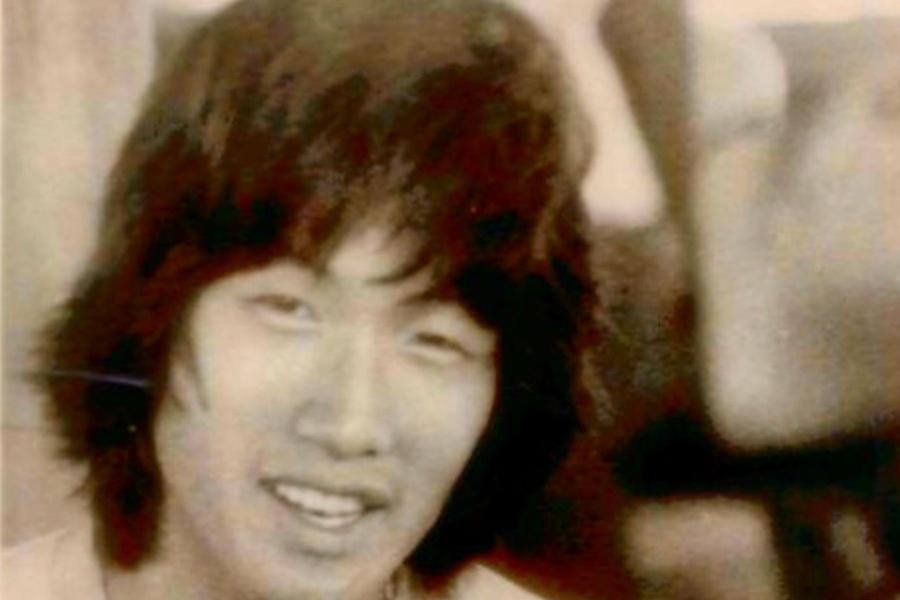
A life seen through fragments
I keep coming back to Lew Eric Jones because his life sits in the gap between history and silence. Some people leave behind piles of paper, interviews, and photographs that almost overexplain them. Lew leaves a different kind of trace. He appears in records, in family references, in memorial listings, in the outlines of a community that tried to remake itself and instead broke apart. That makes him feel less like a finished biography and more like a shape cut into fog.
What interests me most is not simply that he was part of Jonestown, but that his story reveals how a person can be both deeply ordinary and historically exposed. He was a son, a husband, a father, and a worker. He was also part of a project larger than himself, one that folded private life into public ideology. The result is a portrait built from shards. It is incomplete, but it is still legible.
Family as design, not just destiny
Lew Eric Jones was not merely adopted into a family. He was brought into a social experiment. The Jones household was presented as proof that racial unity could be lived, not just preached. That meant family was never only personal. It was also symbolic, staged, and watched.
I think that matters because it changes how we read the family tree. Lew’s place inside the Jones household was shaped by politics as much as affection. The names around him form a crowded map: adoptive parents, adopted siblings, a spouse, a child, and extended connections that linked personal identity to the broader Temple world. That structure gave him belonging, but it also narrowed the distance between the self and the institution. He did not stand outside the story of Peoples Temple. He was inside its architecture.
This is one of the most revealing angles on his life. It is easy to talk about family in warm language. It is harder to see family as a system of loyalty, image, and control. In Lew’s case, both things were true at once.
Work in Jonestown as survival
Lew’s daily responsibilities in Jonestown show another layer of his life. He was not living in abstraction. He was repairing machinery, baking food, playing music, and helping with security. Those tasks sound practical because they were practical. A remote settlement needs hands, not slogans. Engines fail. Bread must rise. Music is needed to keep spirits from collapsing. Security is needed when fear becomes part of the weather.
I find this part of his story especially human. It pulls him out of the shadow of tragedy and places him in the middle of routine labor. He was part of the machinery that kept the community functioning. That does not make the setting less grim. It makes it more real. The horror of Jonestown was not built in a single day. It was assembled through schedules, chores, expectations, and discipline. That is how a system becomes a cage: not with one lock, but with many small ones.
Lew’s work also points to how little room there was for individual career identity. In Jonestown, a person’s value was measured inside the collective. There was no outside résumé waiting to be written. There was only the next task, the next meal, the next day.
Marriage, fatherhood, and the small fire of private life
Among the hardest things to hold in mind about Lew Eric Jones is that his life included ordinary tenderness. He married Terry Carter Jones. They had a son, Chaeoke Warren Jones. Those facts matter because they resist the flattening effect of disaster. They remind me that even in a controlled environment, people still made homes inside their homes.
Marriage and parenthood are not dramatic in the way history books often prefer. They are repetitive, fragile, and full of small acts. A held hand. A child fed. A name repeated in the dark. In a place like Jonestown, those gestures became even more precious because the wider world was tightening around them.
I think of that family branch as a candle in a storm. It burned briefly, and then it vanished with the rest of the community on November 18, 1978. There is no need to overstate the tragedy. The facts already do that. What I want to emphasize is the shape of the loss. It was not only a public catastrophe. It was also a private erasure. A young family was extinguished at once.
Records, contradictions, and the problem of memory
What survives of Lew is not a full narrative, but a stack of records. That matters more than it might seem. Records are blunt instruments. They preserve names, dates, and roles, but they rarely capture voice. They can tell me where someone was born, what work they did, or where they were buried. They rarely tell me what the person feared, hoped for, or noticed on an ordinary afternoon.
Even so, the surviving documentation opens new angles. One detail that stands out is the birthdate discrepancy found in archival materials, where one record gives a slightly different date than the one usually repeated. That kind of inconsistency may seem minor, but it reveals how difficult it is to reconstruct life in a closed, chaotic historical environment. Paper trails bend. Dates drift. Identity gets translated through bureaucracy.
I also find the burial record meaningful. Lew’s final resting place in Earlham Cemetery anchors him in a geography far from Seoul and far from Guyana. That is the odd geography of many Jonestown stories. People were carried across countries, cultures, and systems. Their lives ended in one place, but the evidence of them is scattered across others. The map itself becomes a kind of metaphor for fragmentation.
The wider family and the afterlife of a name
Lew’s story does not stop with him. It branches into the lives of relatives, survivors, and descendants of memory. Some siblings survived because they were elsewhere when the tragedy occurred. Others died in Jonestown. That split adds another layer to the family history. Survival, in this context, is not a clean blessing. It is a form of continuation shadowed by absence.
I am struck by how the family became part of the public memory of Jonestown. In some cases, relatives have spoken out. In others, the silence has been nearly complete. Lew falls into the quieter category. That quiet does not mean insignificance. It means the opposite. It means the absence itself becomes part of the story.
When a name like Lew Eric Jones appears in memorial entries, archival references, or documentary retellings, it functions like a faint signal through static. It is easy to miss. It is harder to forget once noticed. The name keeps asking the same question: what does a life become when the institution that shaped it also helped erase it?
Public memory and the weight of absence
I think the enduring fascination with Lew Eric Jones comes from this tension between visibility and disappearance. He is visible enough to be identifiable, yet too little documented to feel complete. That gap creates pressure. Historians, readers, and descendants all lean into it trying to hear more than the archive gives.
The truth is that public memory often prefers the loudest figures. Leaders, perpetrators, and spokespeople dominate the field. But the quieter lives are often where the texture lives. Lew’s life tells me what the broad histories can miss: how a person is held inside a family ideology, how work shapes identity, how a young father’s life can be both intimate and historical at the same time.
He is not a footnote to me. He is a lens.
FAQ
Who was Lew Eric Jones?
Lew Eric Jones was a South Korean-born member of the Jones family and the Peoples Temple community. He lived inside the movement’s family structure, worked in Jonestown, and died there in 1978.
Why does his story matter?
His story matters because it shows how a person can be absorbed into a larger political and religious project while still living a recognizably human life. He was not only part of a tragedy. He was also part of a family, a marriage, and a daily working community.
What new details help expand his story?
Archival material adds useful texture, including family connections, work roles, burial information, and some record discrepancies. Those details do not create a complete biography, but they deepen the outline.
Did Lew Eric Jones have a family of his own?
Yes. He married Terry Carter Jones and had a son, Chaeoke Warren Jones. That small family unit is one of the clearest reminders that his life was not defined by Jonestown alone.
What did he do in Jonestown?
He worked in mechanics, diesel repair, baking, music, and security. Those roles suggest a life built on labor, practical skill, and participation in the settlement’s daily survival.
Why are there contradictions in the records?
Closed communities, poor documentation, and later archival reconstruction often produce mismatched details. In Lew Eric Jones’s case, even a date can appear in more than one form, which is common in historical records shaped by crisis.
Where is he buried?
He is buried at Earlham Cemetery in Richmond, Indiana. That burial site provides a physical anchor for a life otherwise scattered across continents and archives.
What makes his story so difficult to tell?
It is difficult because so much of his life was lived inside a controlled environment, and because the catastrophe that ended it also reduced the amount of personal testimony left behind. The archive gives me facts, but not a voice.