
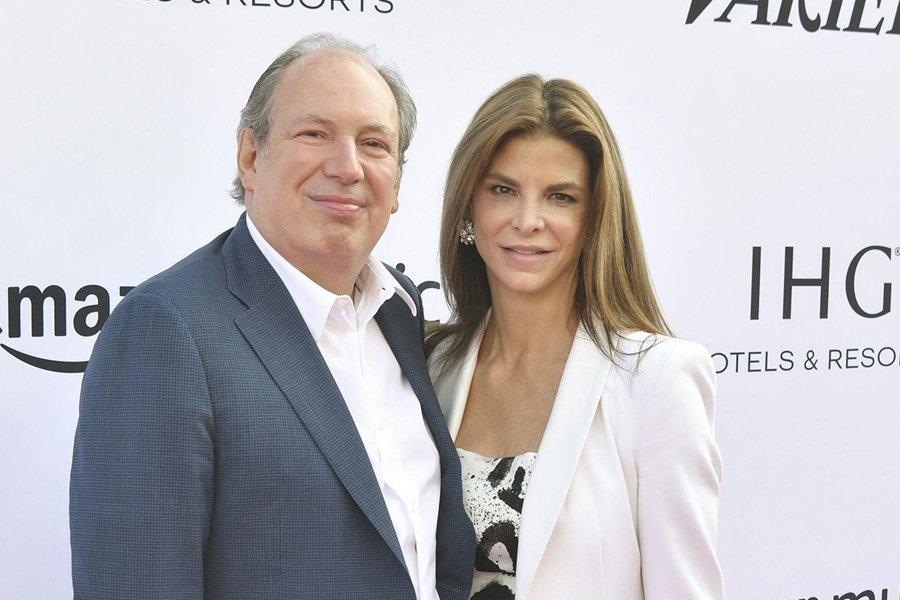
A first impression I did not expect
I remember reading a line and feeling the room shrink. It was a simple fact: she had chosen privacy. That choice bounces around in my head like a pebble dropped into a deep well. Vicki Carolin is a name that sits just outside the bright ring of celebrity. It sits close enough to be mentioned and distant enough to be little more than a silhouette. I want to walk past that silhouette and describe the texture of the coat she wore when she stepped out of the frame. I want to imagine the decisions that made an ordinary life into one that resists being dissected on the internet. What follows is not a rephrasing of what came before. It is my attempt to add the grain and the light, to imagine the spaces between the dates and to attend to the small, human architecture of a private life shared in fragments.
The early chapters and the public ledger
Marriage, a child, divorce. Those are tidy headlines. They do not capture the mornings, the unremarkable dinners, the way someone might carry a shopping bag or keep a sketchbook. I know the recorded dates and the outline of a family story, but I also know that the outline leaves room. I have been thinking about those rooms. I imagine her days before the name became attached to someone elseâs biography. Modeling is a profession full of movement, an apprenticeship in posture and presence. From that training one learns how to stand and how to leave. That last skill can be an art.
Inside the public ledger there are other names and other paths. When a composerâs score becomes a household sound, the people who moved through the composerâs life become marginalia in press accounts. They appear, then they recede. It would be easy to place Vicki Carolin only as an annotation. I refuse that ease. I want to picture agency. I want to picture her tending to a daughter and making choices that are not broadcast but that shaped a household. Those choices are not trivial. They index a temperament that prefers a steady hearth to a spotlight.
A chapter with Hans Zimmer
When public figures change course, their private histories are often rearranged to fit new narratives. A marriage to a rising composer becomes a line item in the story of success. I find it helpful to separate the public chronology from the private textures. The chronology tells us when things happened. The private textures tell us how they felt. A marriage in the early 1980s, a child in 1987, and a divorce in 1992. Those are fixed coordinates. Between them there must have been ordinary bravery and ordinary failures. There must have been a thousand small conversations about money, work, and what to have for dinner. There are also the practical details that never make the front page: the school appointments, the dentist visits, the quiet arguments and the reconciliations that never become anecdotes.
I will not pretend to know the exact moods that season carried. What I will do is credit the presence of nuance. Fame imposes a pressure. A person who prefers privacy can feel that pressure like wind buffeting a window. There are many ways to answer that wind. Some lean into it. Some close the curtains and water the plants.
The continuity through a daughter, Zoë Zimmer
A daughter is both a continuation and an interruption. She carries the DNA of two people and the force of her own becoming. I think of Zoë not as an accessory to a larger story but as a living pivot point. Through her creative career the world glimpses the family that raised her. The names of parents surface and then dissolve into the art. I like to imagine the small moments where influence is obvious: a camera passed across a kitchen table, a dress altered by hand, a photograph framed on a shelf. Those are the domestic economies that do not make headlines but that propel a life toward certain decisions.
As the daughter becomes visible, the parent can return to private life more easily. The child takes on the public-facing role, the visible face of a family history. That shift can be deliberate. It can also be accidental. Either way, it opens a space where someone like Vicki Carolin can maintain a small center. I imagine her reading reviews of exhibitions she did not curate, smiling at work she did not promote, and being satisfied by the fact that the work stands on its own.
What privacy asks of a person
Privacy is a labor. It requires consistent choices. It is not simply silence. It is saying no to certain invitations. It is composing a life that can be enjoyed without the validation of an audience. I think of privacy as a kind of invisible architecture. It must be maintained or it will collapse under the weight of curiosity. Those who choose it become custodians of their own limits. In a world that tends to monetize every detail, maintaining those limits becomes a kind of craft.
I have always been fascinated by the way people arrange their public and private selves. There is a difference between secrecy and reserve. Secrecy hides a thing because the content would be damaging or illegal. Reserve hides a thing because it is ordinary, or because the owner of the thing values the silence around it. I suspect that, for Vicki, the latter is truer. There is dignity in choosing to be a quiet figure in someone elseâs biography.
The objects that remain when headlines fade
Photographs. Letters. Small household items. A pair of shoes kept in a closet. They matter more than any biography because they are the actual artifacts of a life. I like to imagine items that belonged to an ordinary home where art and music were present but not necessarily dominant. A stack of sheet music at the corner of a table. A camera strap that has seen too many streets. A childâs sketch tucked into a book. These objects are stubbornly specific. They anchor a life in ways that press narratives cannot.
They also suggest a way to write about someone who prefers to be private. You write around the objects. You attend to their weight, their fabric, their faint scratches. You let them do the talking. The objects never betray the person. They only tell the truth of the moment they occupied.
FAQ
Who is Vicki Carolin?
Vicki Carolin is a former model who has been described in public accounts as a first wife to a prominent composer and the mother of a daughter who pursued a creative career. I think of her as someone who chose to keep the interior of her life private.
Does she have children?
Yes. She has one daughter who was born in the late 1980s. The daughter later became active in creative fields, and through that work the family name appears from time to time.
When did she marry and divorce?
The marriage took place in the early 1980s and the divorce was finalized in the early 1990s. Those dates are coordinates, not a narrative. The rest of the story lives in the ordinary details.
What was her profession?
She worked as a model. Beyond that simple descriptor there is little public documentation of specific agencies or campaigns. Modeling is an apprenticeship in presence, which I find meaningful when imagining the contours of her life.
Does she have a public social media presence?
No widely verified profiles are attached to her name. That absence is consistent with a chosen preference for privacy rather than a lack of relevance.
Why is information limited?
The limitation reflects a deliberate stance. Not every life invites the camera. Some lives are shaped by edges and by the interior work of making a family, raising a child, and living a life that is content to be small in the public ledger.